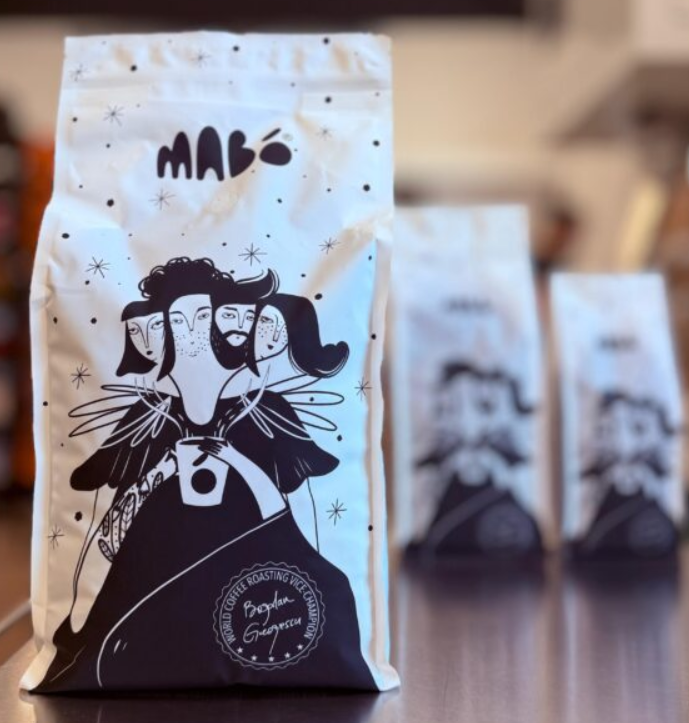
LOS PLACERES, NICARAGUA (WASHED)
LOS PLACERES, NICARAGUA (WASHED)
Couldn't load pickup availability
Fincas Mierisch comprises 9 coffee farms in Nicaragua and 3 coffee farms in Honduras.

In Nicaragua, the farms are located in the departments of Matagalpa and Jinotega. Matagalpa is home to 6 farms while Jinotega, a little further northwest, is home to 3 farms. Each farm has a unique microclimate and soil composition, making their management and coffee quality truly distinct from one another.
We start with optimally ripe, hand-picked cherries. Then it’s about the care and diligence during processing, fermentation, slow drying, milling and sorting. It takes years of trial and error, experimenting with varietals and processes, never being completely satisfied, recognizing that we don’t know everything, never settling for the status quo and making personal and financial improvements to help us reach the next level. Every harvest we know we can improve something, and we always try to.
It’s an effort that can only be achieved by focusing on one cherry, one tree, one day and one bag at a time. This focus allows us to achieve complete separation of lots – giving us the opportunity to search for the gems on the cupping table.
It’s not for the easily frustrated or impatient. In some cases, it takes up to 4 years to taste the results of an experiment. The reward for this labor is the breadth of unique cup qualities from the lots we offer.
Coffee is about consistency. You want your coffee to taste the same all day, and year after year. We strive to provide our customers with the same, or better, quality each harvest. We can achieve this through our strict and detailed harvesting and processing protocols. We are aware that all our customers want to experience consistency.

Arabica Ethiosar Varietal
Ethiosar is a hybrid of the Ethiopian varietal Rume Sudan and Sarchimor. The respective varietals are themselves hybrids. Rume Sudan is a Typica mutation from Ethiopia, Sarchimor is a hybrid of Villa Sarchi, a natural dwarf mutation of Bourbon and Timor.
Washed Fermentation
The washing process is widely used in Latin America and parts of East Africa. It involves removing the pulp and mucilage around the parchment, either by friction or by fermentation and with large volumes of water. The most common practice of the different stages of this process is shown below:
- Selectively harvested cherries do not require extensive quality control. After the cherries have been loaded into a siphon, the uniformity of ripening can be easily appreciated. Water is used for separating floats and for transporting cherries.
- Submerged cherries are transported to the pulper which mechanically forces the seeds out of the cherry. At this stage, the beans are still covered with a layer of mucilage that adheres to the parchment.
- Water is then used to stop fermentation by cleaning the parchment of microorganisms and organic matter. This water then guides the beans to the drying facilities. In addition, the beans can be separated into washing channels by density.
- Coffee drying is done on terraces, raised African beds or mechanical dryers.
The washing process is the most resource-intensive processing method. It was developed in equatorial regions, where frequent rains required fast processing times.